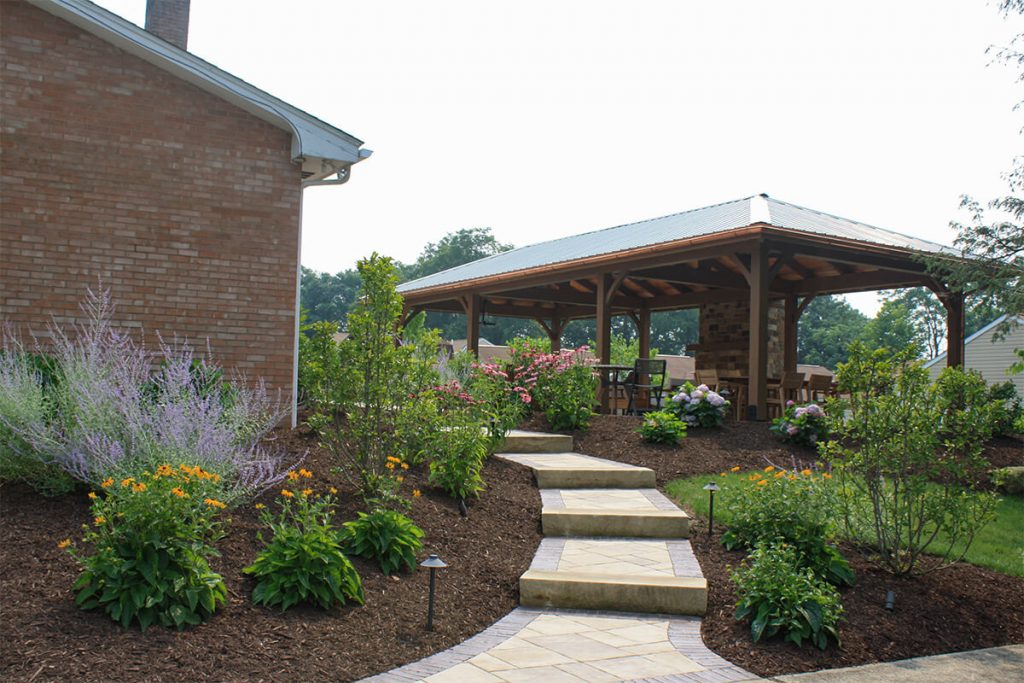
Many people use the terms landscape architecture and landscape design as if they mean the same thing. At a glance, the confusion makes sense. Both professions shape outdoor spaces, both can improve how a property looks and functions, and both may be involved in residential projects. Still, they are not interchangeable.
The difference matters because the professional you hire affects more than style alone. It can influence how a site handles drainage, whether plans meet code requirements, how construction is documented, and how well the finished property performs over time. For homeowners investing in a refined outdoor environment, understanding that distinction is important from the start.
Landscape design and landscape architecture both deal with exterior spaces, but they approach them from different levels of complexity. A landscape designer often focuses on visual composition, planting concepts, and the overall feel of a garden or outdoor living area. A landscape architect can certainly address aesthetics, but the role also extends to technical planning, site engineering coordination, grading, drainage, permitting, and long-term site performance.
In other words, one profession may be centered more heavily on the appearance and arrangement of outdoor elements, while the other combines design vision with technical expertise and regulatory knowledge.
For a property owner, especially one planning a high-end outdoor renovation or new build, that difference is not minor. It can shape the entire process.
One of the clearest distinctions between the two professions is education and licensure.
Landscape architects typically complete an accredited degree in landscape architecture. Their training includes design theory, site analysis, grading and drainage, environmental systems, construction methods, materials, and technical documentation. They also study how outdoor spaces relate to architecture, infrastructure, land use, and human movement.
In many states, landscape architects must also be licensed. Licensure usually requires a combination of formal education, documented professional experience, and successful completion of licensing examinations. Because of that, licensed landscape architects are held to professional standards and legal responsibilities that go beyond visual design alone.
This background prepares them to work on projects that involve technical site constraints, permitting requirements, code compliance, and built features that need to perform properly over time.
Landscape designers often come from backgrounds in horticulture, garden design, fine arts, or practical design. Many are highly skilled in plant selection, composition, color, texture, and in creating inviting outdoor spaces. Some have formal training or certifications, while others have built strong expertise through years of design practice.
However, landscape designers are not generally licensed in the same way as landscape architects are. Their role is usually more focused on the artistic and horticultural side of a project rather than the technical and regulatory side.
That does not make landscape design less valuable. It means the profession typically serves a different purpose.
The next major difference is scope. While both professionals may create plans for outdoor spaces, the level of technical responsibility is often very different.
Landscape architects are equipped to address both beauty and performance. Their work may include:
This broader scope makes landscape architects especially important for projects where the land itself must be reshaped, drainage issues need to be addressed, or built features require careful planning and documentation.
For example, if a property includes steep grade changes, runoff concerns, complex hardscaping, a pool, terraces, outdoor structures, or municipal review, a landscape architect is often the more appropriate professional to lead the design. These projects are not only about appearance. They require technical judgment and a full understanding of how the site will function.
Landscape designers often focus on the visual arrangement of the outdoor environment. Their work may include:
This can be a strong fit for projects with a simpler scope and that do not require significant grading, structural site work, or permitting. A landscape designer may be ideal for refreshing planting beds, developing a garden concept, or refining the look of a smaller outdoor area where the underlying site conditions are already stable and resolved.
Again, the distinction is not about creativity versus technical knowledge as an absolute. It is about the depth of responsibility involved in the project.
A licensed landscape architect is often the right choice when the project extends beyond decoration into site planning, engineering coordination, or regulatory oversight.
Examples include:
These are the types of projects where a licensed professional can bring clarity, accountability, and technical depth. The goal is not only to create a beautiful result, but to ensure that the space works properly, complies with requirements, and retains its value.
For a firm like Brown Design Group, this distinction is central. As landscape architects, they are positioned to approach outdoor environments with both design sophistication and technical rigor. Their role is not limited to selecting plants or styling a yard. It is to shape outdoor spaces in a cohesive, well-resolved, and long-term-performing way.
There are also situations where a landscape designer may be a practical choice.
Examples include:
In projects like these, the focus may be more on appearance than on major site intervention. If no grading plan, permitting process, drainage redesign, or structural coordination is required, a landscape designer may be well-suited to the work.
The key is to match the professional to the project’s complexity.
On luxury residential properties, outdoor spaces rarely function as an afterthought. They are extensions of the home itself. Terraces, entry sequences, site walls, garden rooms, lighting, circulation, and drainage all need to work together. The design must feel intentional, but it also has to be technically sound.
This is where the distinction becomes especially important. A beautiful concept alone is not enough if a patio drains poorly, a retaining wall is not properly considered, or site features are not coordinated with the home’s architecture. High-level exterior environments require both artistic judgment and technical discipline.
That is why many sophisticated residential projects benefit from the leadership of a licensed landscape architect. The investment supports more than aesthetics. It supports function, compliance, and long-term value.
Landscape architecture and landscape design overlap in some ways, but they are not the same profession. Landscape designers often focus on the visual and horticultural character of an outdoor space. Landscape architects bring that design thinking together with technical training, licensure, and the ability to address grading, drainage, permitting, and structural site considerations.
For smaller, simpler projects, a landscape designer may be a good fit. For complex properties, major renovations, and high-end outdoor environments that require careful planning and coordination, working with a licensed landscape architect offers a deeper level of expertise.
That added expertise can make a meaningful difference in how a project looks, functions, and holds its value over time. For homeowners seeking a polished, enduring result, a professional landscape architecture firm like Brown Design Group delivers the level of planning and refinement that sophisticated projects deserve. Contact Brown Design Group today to get started!

