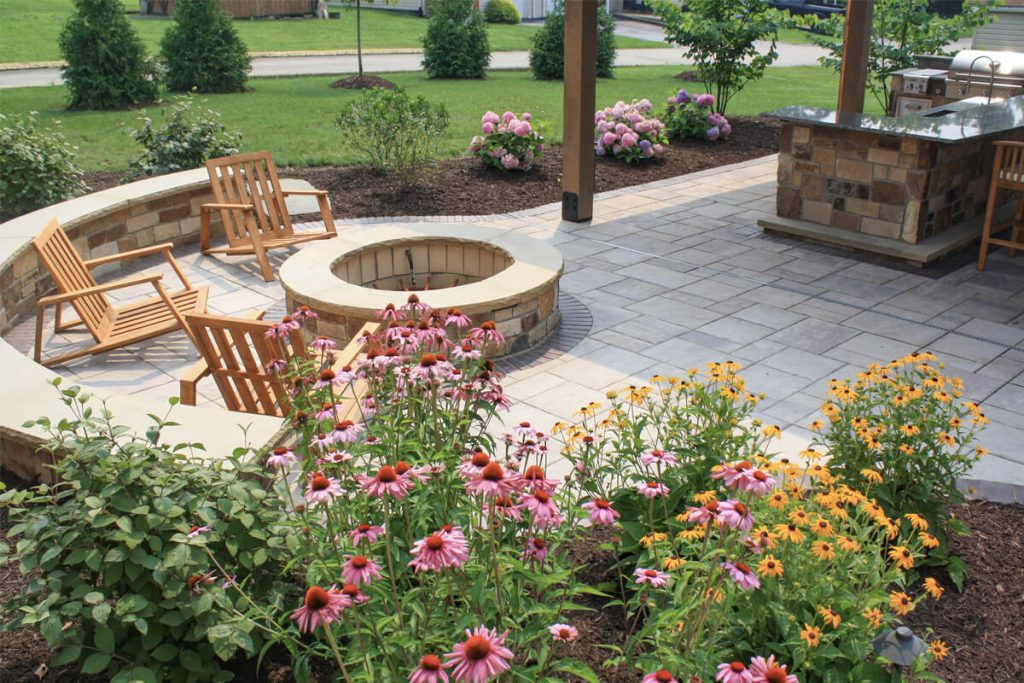
Plant selection plays an essential role in the long-term success and sustainability of a landscape. Choosing native and drought-tolerant plants helps to reduce the need for excessive irrigation, fertilizers, and pest control, cutting down on maintenance costs while supporting the health of the surrounding environment.
At Brown Design Group, we utilize plant palettes customized to each property’s location, soil, and exposure. In the Pittsburgh region, where weather can swing between cold winters and hot, humid summers, we use plants that are both resilient and suited to local conditions.
In this article, we’ll explain the benefits of using native and drought-tolerant species, highlight regionally appropriate plant choices for Western Pennsylvania, and share seasonal tips for planting and care.
Why Choose Native Plants?
Native plants are species that have grown in a particular region for hundreds, or even thousands, of years. Because these plants have evolved alongside the local climate and wildlife, they’re specifically suited to thrive without much outside support.
Key Benefits of Native Plants:
- Lower water needs: They’re already adapted to the rainfall patterns of the area.
- Pest resistance: Native plants are more likely to withstand common regional pests and diseases without the need for chemical treatments.
- Support for local biodiversity: Native plants provide food and great habitat for pollinators like bees, butterflies, and birds.
- Reliable performance: These species are more likely to survive weather swings and unexpected cold snaps or droughts.
Native Plants for Pittsburgh Landscapes
Here are some native plants that perform well in the Pittsburgh area and surrounding regions:
Perennials & Wildflowers
Black-Eyed Susan (Rudbeckia hirta): Bright yellow blooms; tolerant of sun and poor soil.
Bee Balm (Monarda didyma): Attracts pollinators and adds bold color.
Purple Coneflower (Echinacea purpurea): Hardy and long-blooming; attracts butterflies.
Cardinal Flower (Lobelia cardinalis): Striking red flowers; thrives in moist soils.
Grasses & Groundcovers
- Little Bluestem (Schizachyrium scoparium): Great for structure and movement.
- Pennsylvania Sedge (Carex pensylvanica): A low-growing, shade-tolerant groundcover.
- Switchgrass (Panicum virgatum): Tolerates both drought and periodic flooding.
Shrubs
- Mountain Laurel (Kalmia latifolia): Evergreen with showy blooms in spring.
- Winterberry (Ilex verticillata): A deciduous holly with bright red berries that support winter wildlife.
Trees
- Red Maple (Acer rubrum): Known for brilliant fall color and adaptable growth.
- Eastern Red Cedar (Juniperus virginiana): Tough and evergreen; ideal for screens or windbreaks.
- Flowering Dogwood (Cornus florida): A spring favorite with year-round interest.
Why Add Drought-Tolerant Plants?
While Western Pennsylvania is not considered an arid region, the area does experience dry spells, especially during the peak of summer. Drought-tolerant plants are valuable for conserving water and maintaining landscape health when rainfall is limited.
Key Benefits of Drought-Tolerant Plants:
- Reduced water use: Helps conserve both natural and municipal water resources.
- Less irrigation infrastructure: Fewer sprinklers, hoses, or complex systems required.
- Increased plant resilience: Drought-tolerant species are better equipped to bounce back from stress.
Drought-Tolerant Options for Pittsburgh
Many drought-tolerant plants also double as native or regionally adapted selections, making them ideal for a balanced, sustainable palette.
Perennials
- Yarrow (Achillea millefolium): Heat-tolerant, low-growing, and available in many colors.
- Lavender (Lavandula spp.): Fragrant and drought-hardy; prefers full sun and well-drained soil.
- Daylily (Hemerocallis spp.): Durable with reliable blooms.
- Butterfly Weed (Asclepias tuberosa): A type of milkweed, essential for monarch butterflies.
Grasses
- Little Bluestem: Performs well in drought and offers seasonal interest.
- Prairie Dropseed (Sporobolus heterolepis): Fine-textured and tolerant of poor soils.
- Blue Fescue (Festuca glauca): Compact, ornamental grass with good drought resistance.
Shrubs
- Lilac (Syringa spp.): Popular for its scent and spring flowers.
- Ninebark (Physocarpus opulifolius): Offers color and texture with minimal watering needs.
- Juniper (Juniperus spp.): Hardy evergreen with year-round coverage.
Trees
- Hedge Maple (Acer campestre): Small, manageable shade tree.
- White Fir (Abies concolor): Evergreen with soft needles and drought tolerance.
- Green Hawthorn (Crataegus viridis): Attractive flowers and fruit; useful for wildlife support.
Seasonal Planting Tips and Soil Compatibility
Even drought-tolerant and native plants benefit from good planning and proper timing. At Brown Design Group, we assess soil conditions and planting windows to give each plant the best possible start.
Seasonal Strategy
Spring and early fall are the best times to plant in the Pittsburgh area. Cooler temperatures and regular rainfall help roots get established before the heat of summer or the deep cold of winter.
Summer planting is possible but may require extra watering during establishment. We often recommend mulch to retain moisture and keep root zones cool.
Soil Matters
- Soil type and condition greatly affect plant performance, even if they’re labeled as drought-tolerant or native.
- Clay-heavy soils may need amendments like compost or sand to improve drainage.
- Compacted urban soils benefit from aeration and organic matter to support root growth.
- Sandy or rocky soils tend to drain quickly, which suits many drought-tolerant species but may require more frequent watering early on.
We test and evaluate soil before planting and offer recommendations to adjust or improve conditions where needed.
Choosing the Right Plants for Your Site
There’s no one-size-fits-all solution when it comes to plant selection. That’s why our team looks at:
- Sun exposure: Full sun vs. partial or full shade
- Moisture availability: Wet spots, slopes, or dry zones
- Maintenance goals: Formal appearance or naturalized meadow
- Pollinator support: Plants that attract butterflies, birds, or bees
We create custom plant palettes for each project—balancing function, aesthetics, and sustainability.
Designing with Purpose
Using native and drought-tolerant plants doesn’t mean sacrificing beauty or variety. With the right strategy, these plants can create landscapes that look great year-round, require less upkeep, and support your local environment.
Whether you’re starting fresh or updating an existing yard, garden, or commercial site, plant selection can make all the difference.
Let’s Build a Smarter Plant Palette
At Brown Design Group, we believe landscapes should be practical, attractive, and rooted in their surroundings. If you’re thinking about updating your outdoor space with more sustainable plant choices, we can help.
We’ll design a plant list that fits your site, goals, and maintenance preferences without wasting water or adding unnecessary complexity. Contact us today to start planning your dream landscape!
With over 25 years of experience, Brown Design Group has become a trusted name in Pittsburgh for creating stunning outdoor spaces and building lasting client relationships. Led by founder George Brown, the team includes talented landscape architects, designers, craftsmen, and project managers who are passionate about transforming outdoor visions into reality through a personalized, collaborative approach.
Latest posts by Brown Design Group
(see all)