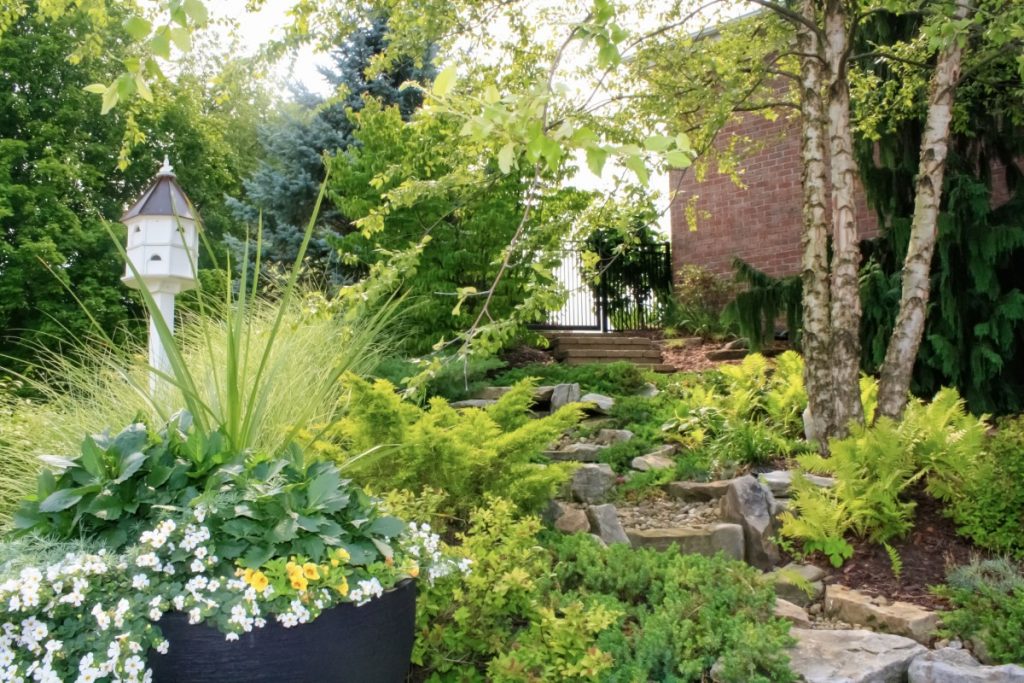
Sustainable landscape architecture is about designing outdoor spaces that are both functional and environmentally responsible. It focuses on reducing negative environmental impacts while improving how a space works for people, plants, and wildlife. Instead of working against nature, this approach works with the land—using innovative design to conserve resources and support long-term site health.
At Brown Design Group, we incorporate sustainability into every project we undertake. Whether designing a backyard, a commercial plaza, or a public space, we consider how the landscape will perform over time—not just how it looks the day it’s installed.
In this post, we’ll break down the key principles of sustainable landscape architecture, how it differs from conventional landscaping, and how our team approaches the process with a practical, well-rounded strategy.
Short-term aesthetics often drives traditional landscaping. It may involve large turf areas, non-native plants, high water use, and materials that need regular upkeep or replacement. While the result may look nice at first, these landscapes can be expensive to maintain and tough on the environment.
Sustainable landscape architecture takes a more thoughtful and long-term view to creating outdoor spaces. The goal of this approach is to:
In short, sustainable design tries to solve problems before they happen—by making choices that serve both people and the environment over the life of the project.
Three core ideas drive sustainable landscape design: ecological balance, resource efficiency, and use of native plants. Each idea plays a vital role in building outdoor spaces that are reliable and contribute to a better environment.
Every landscape is part of a larger system—soil, water, wildlife, and people all interact. Good design considers these systems and avoids disrupting them.
Some examples of maintaining ecological balance include:
By balancing these elements, the landscape is more stable and needs less ongoing intervention.
Sustainable landscapes are designed to use fewer inputs. That means:
Efficiency isn’t about cutting corners—it’s about choosing systems and materials that do more with less. Over time, this approach lowers utility bills and maintenance costs.
Native plants are a core feature of sustainable landscapes. Because they’re already adapted to local climate and soil conditions, they tend to grow well with minimal support. They also offer food and shelter for local wildlife.
Incorporating native or well-adapted regional plants helps:
That doesn’t mean every plant must be native, but we aim to avoid species that require heavy maintenance or pose risks to the local ecosystem.
At Brown Design Group, we take a holistic view of every site we work on. Sustainable design isn’t a separate step—it’s part of our entire process, from early planning to project completion and beyond.
We start by analyzing the site’s existing conditions: soil health, drainage patterns, sun exposure, existing vegetation, and more. This helps us design in a way that fits the space naturally instead of forcing it to conform.
We consider:
Sustainability also includes helping clients meet their goals without creating long-term challenges. That might mean:
We explain the “why” behind our recommendations and tailor each design to the client’s needs, budget, and maintenance preferences.
We also think beyond the install date. Our goal is to design landscapes that improve with time. That might involve:
Our team prioritizes choices that will withstand changing conditions, whether increased rainfall, dry spells, or heavier foot traffic.
Sustainable landscape architecture isn’t just about the environment—it also makes sense for property owners, municipalities, and communities.
The benefits are wide-ranging:
It’s a wise investment for homeowners who want to reduce upkeep, businesses looking to improve their property responsibly, and developers aiming to meet sustainability requirements.
At Brown Design Group, we believe well-designed landscapes should be beautiful, functional, and sustainable—without adding unnecessary complexity. Our team takes a practical, experienced approach to sustainability by:
We don’t overdesign or oversell. We create outdoor spaces that are made to work, last, and look good doing it.
If you’re planning a landscape project and want to build something that’s both environmentally sound and easy to maintain, our team is here to help. Sustainable landscape architecture isn’t about sacrificing style or comfort; it’s about making smart decisions that add lasting value.
Let’s talk about what sustainable design can look like for your property. Call us today!

